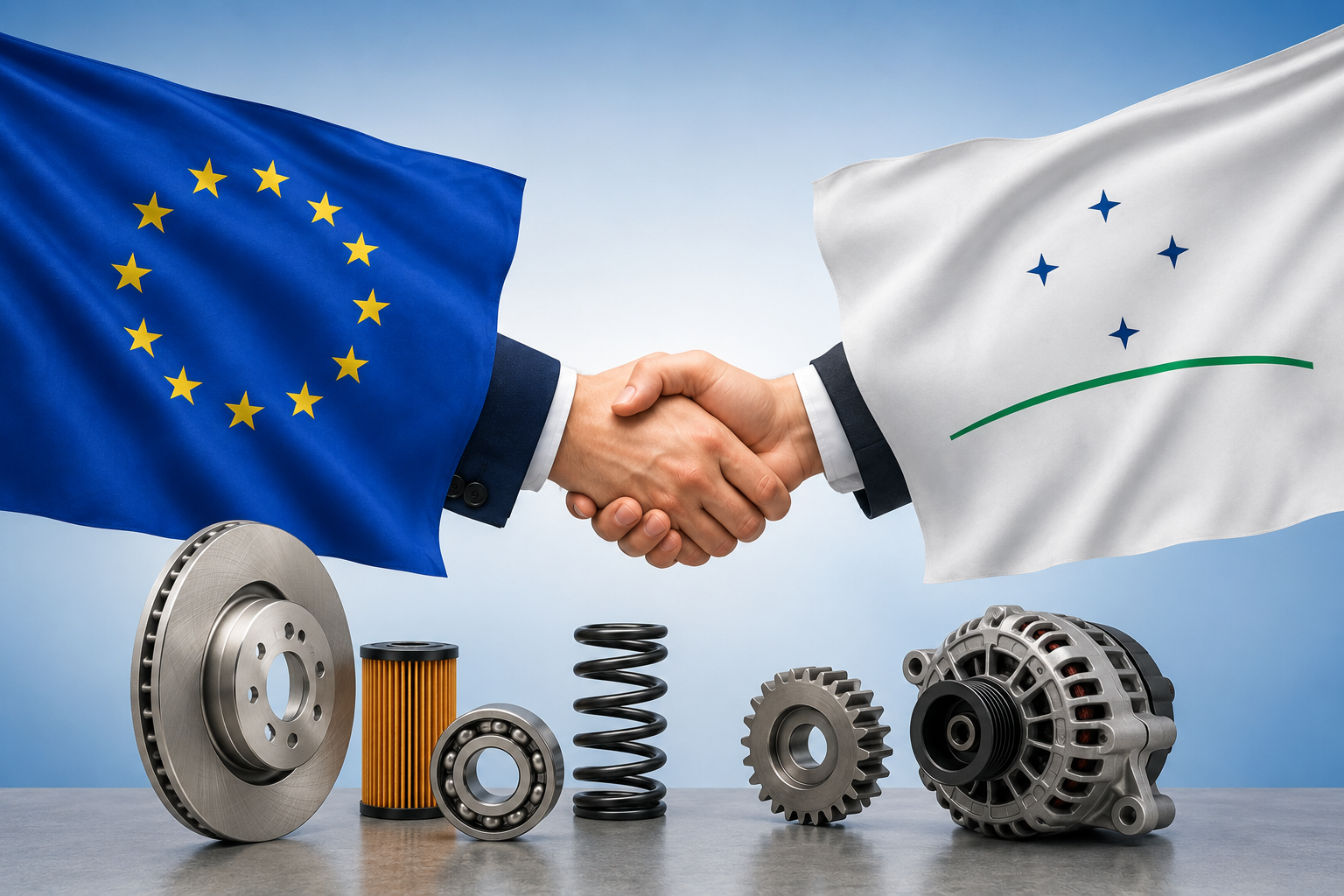
What the EU–Mercosur agreement is
The agreement links the European Union with the Mercosur countries — Argentina, Brazil, Paraguay and Uruguay — in one of the largest free-trade zones in the world. At the heart of the pact is a simple goal: to reduce and, over time, eliminate tariffs on thousands of industrial goods moving between the two blocs.
Auto parts and machinery spares are among the categories affected. This matters because, for years, the import tariff was one of the reasons European parts looked expensive in the region.
Why European parts become more competitive
When tariffs fall, the landed cost falls. A European OEM or aftermarket part that once carried a significant duty now arrives with a price advantage it did not have before. For the buyer, the gap between a European part and a lower-quality alternative starts to disappear, while the difference in durability remains.
What changes for workshops, importers and fleets
- Workshops: more affordable access to European-brand parts, with the reliability that reduces rework and warranty claims.
- Importers and distributors: better margins on European lines and a stronger pitch to their own customers.
- Fleet operators: a lower total cost of ownership, because higher-quality parts mean less downtime.
How to position yourself now
The shift does not happen overnight: tariffs are phased down over several years. The buyers who win will be the ones who plan ahead, consolidate their European sourcing, and build supply-chain relationships before the advantage is obvious to everyone. At EuropaYa we help our customers do exactly that.